Tomorrow is Thanksgiving, and if you know me, you know it’s my favorite holiday of the year. Good food (to Americans), gratitude, and quality time with family and friends. What’s not to love? It’s also a time when I like to take stock of the year-to-date and milestones we’ve reached along the way. Most of them never leave our workspace, but some are so momentous they make it onto the blog. This is one of those posts.
You may have noticed last month that we moved from informal.cc to informal.com. This month, we shipped a brand new website, and behind the scenes, our cofounder Sam Holland has been rebuilding the entire informal platform from scratch. The informal brand is growing and there are a lot of new developments coming in 2027. But for now, I’m super thankful to be where we are today.
Hello, informal.com
Confession: We’ve wanted informal.com for years. Like from day 1.
For a long time, it just wasn’t in the cards. Neither was .co for that matter, so back in 2018, we settled for .cc, thinking that like our hardware peers Littlebits.cc, we’d be joining a club of hardware cool kids with Cocos Islands domain names. We were very wrong and have lived with the incessant need to repeat our URL multiple times in conversations for years. This year, we finally had enough and were (thankfully) in a place to acquire it. So we did!
From the outside in, a domain change may feel like a small thing. But for me and Sam, and for our internal team, it feels like growing up. Informal started as a scrappy collective of hardware professionals banding together to build great hardware companies. We’re still that, but we’re becoming a platform that supercharges the whole hardware community. This is day 1 all over again.
A new website to go with it
New domain, new website. Here’s what changed:
- Client case studies. We added a ton! From solo inventors to publicly traded companies, we’ve doubled the number of clients featured, allowing us to better highlight the sheer diversity of the industries we serve.
- Member profiles. Many more members are now featured, representing the wide range of skills and expertise represented in the community.
- New Process page. We finally added a page all about how we work and the unique process that powers informal projects.
- Faster and easier to update. The site loads quicker, and it’s much easier for us to modify, so expect new stuff a lot more often.
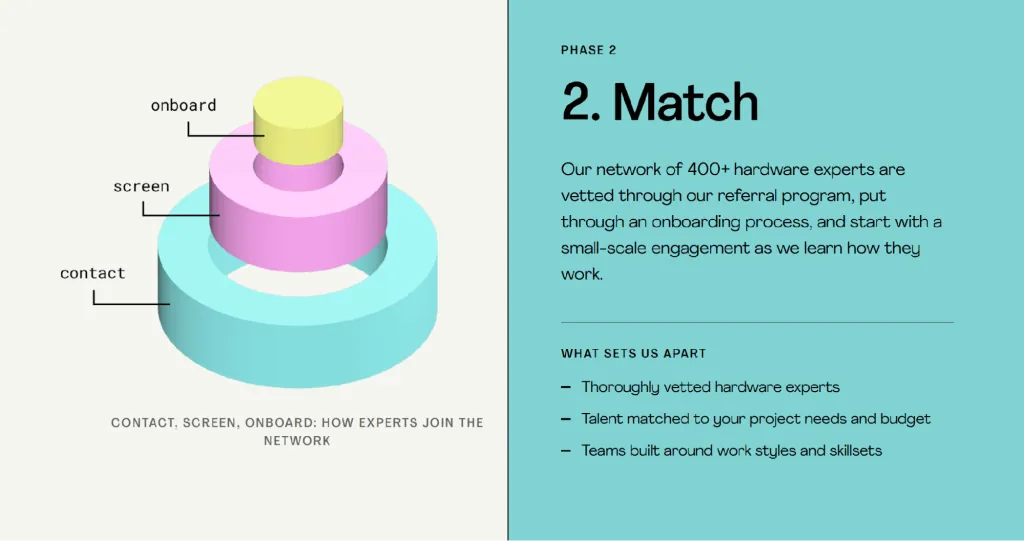
Our new Process page breaks down how we work.
All of this was built with Claude Code and Lindsey Gideon. Thank you, Lindsey!
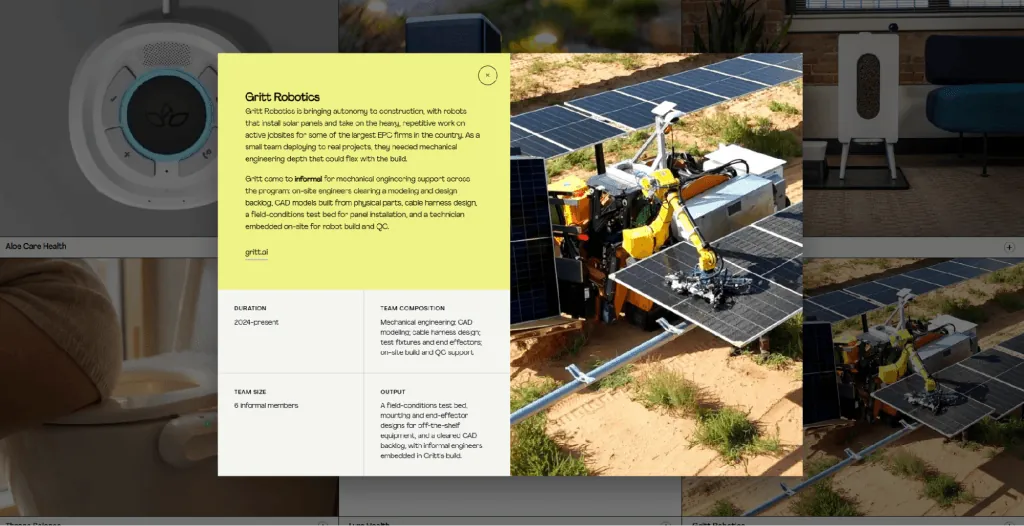
Some of the new clients featured on our Clients page.
Meanwhile, Sam rebuilt everything else
While the website was getting its glow-up, Sam was doing something way bigger in parallel. Using Claude Code, Sam rebuilt the informal platform from the ground up, completely replacing the no-code infrastructure we’d built up over five years — in a matter of months.
It sets us up for informal’s next chapter, and I’m super excited about it. Here are a few sneak peeks.
First up, the dashboard. Members and our internal team can now see how they’re doing at a glance: how many projects they’re on, how much time they’ve worked, how much they’ve earned, what’s been invoiced, what’s still waiting to be paid, and more. No digging, no asking around — it’s all right there.
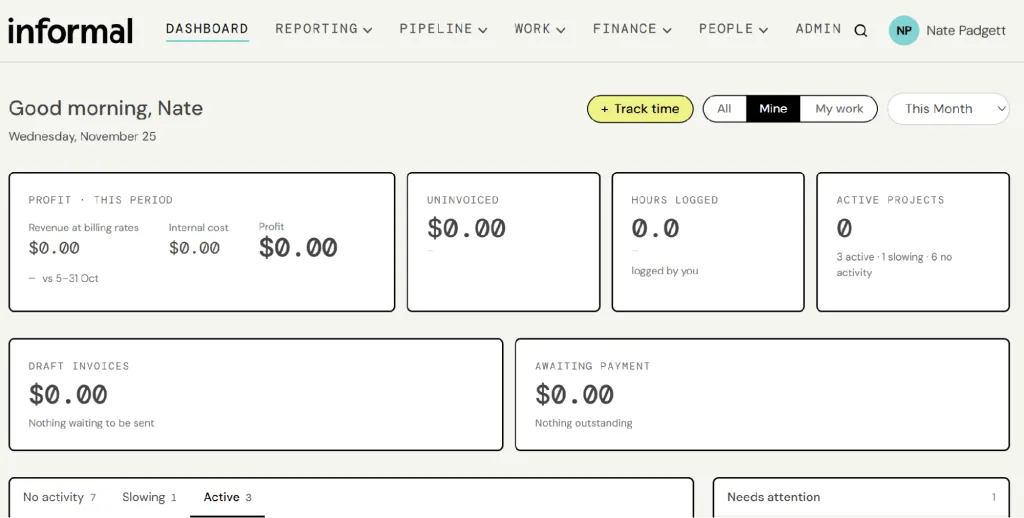
Sadly, I’m not very profitable.
Second, matching. This is the heart of what we do, and the new platform makes it lightning fast. There’s a classic searchable database of every member and client, with hundreds of data points for each one, so we can filter by discipline, experience, location, availability, rate, and a whole lot more. And there’s an AI chat interface we can just talk to. Describe what a client needs, and it instantly surfaces the right profiles and helps us shape the match.
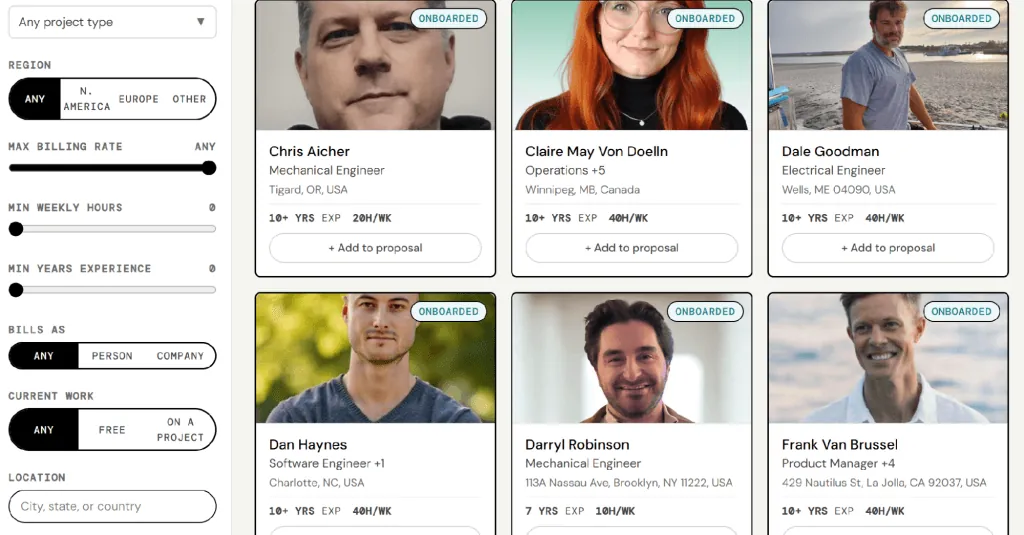
So many ways to match our members with opportunities.
Third, the client map. It shows us exactly where our clients are so we can decide where to focus our resources, whether that’s local recruiting, supporting Hardware Meetup chapters, or figuring out which city we should be spending more time in.
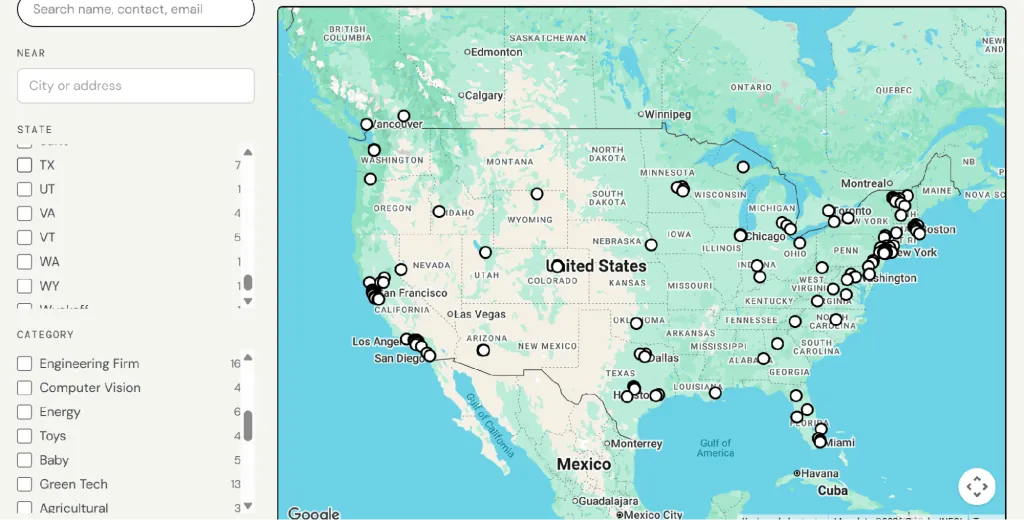
Lots of ways to pinpoint our clients. This is just a look at the US.
The point of all of this is simple: faster, better matches between our members and the companies that need them. That means hardware teams spend less time hunting for the right people and more time doing what they actually want to do: build.
We’re already seeing massive improvements in how quickly we can execute, and we’ll have a lot more to share about the new platform in a future post.
Lots to be thankful for
Obviously the year’s not over and December’s always a mad dash (especially with CES around the corner). But we’re basically there and looking back at what we’ve done year-to-date, I’m super proud of our team.
Thank you:
- Lindsey, for launching a new website in record time
- Sam, for rebuilding the whole engine while the plane was still flying
- Claude Code, for helping a small team execute big goals
- Our marketing, operations, and sales teams for cranking all year
- And most of all to our members, clients, partners, and all of you reading this post: None of this exists without you.
Happy Thanksgiving everyone!