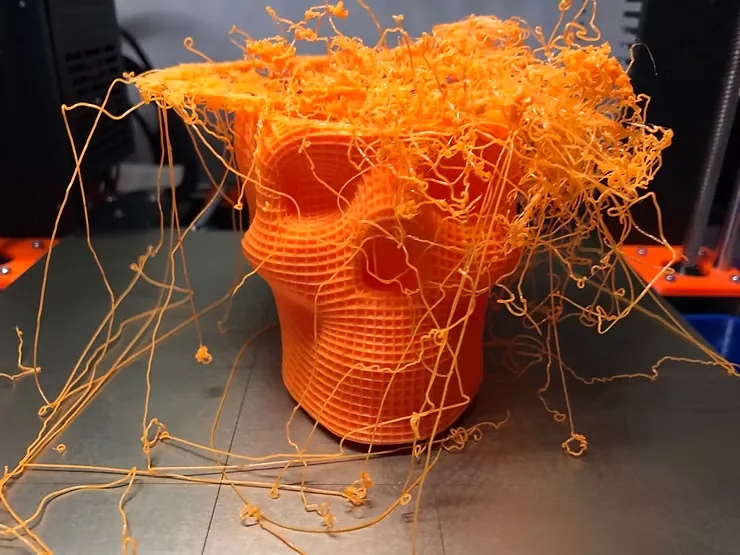
Epic 3DP fail by gdahilig
Every October, the NY Hardware Meetup picks a theme that fits the season. This year it was Hardware Horror Stories, and the 121st meetup, hosted at Nominal, delivered four of them. This recap was written by the meetup’s organizers and is shared here because the lessons apply well beyond New York.
If you’ve spent time building physical products, you probably have a few stories of your own. The prototype that worked until production started. The intermittent failure that disappeared whenever you tried to measure it. The product that made technical sense but never found its market.
The four speakers covered embedded systems, test infrastructure, 3D printing, and an industrial product launch. Here’s what went wrong and what each of them took from it.
When hardware and software problems meet
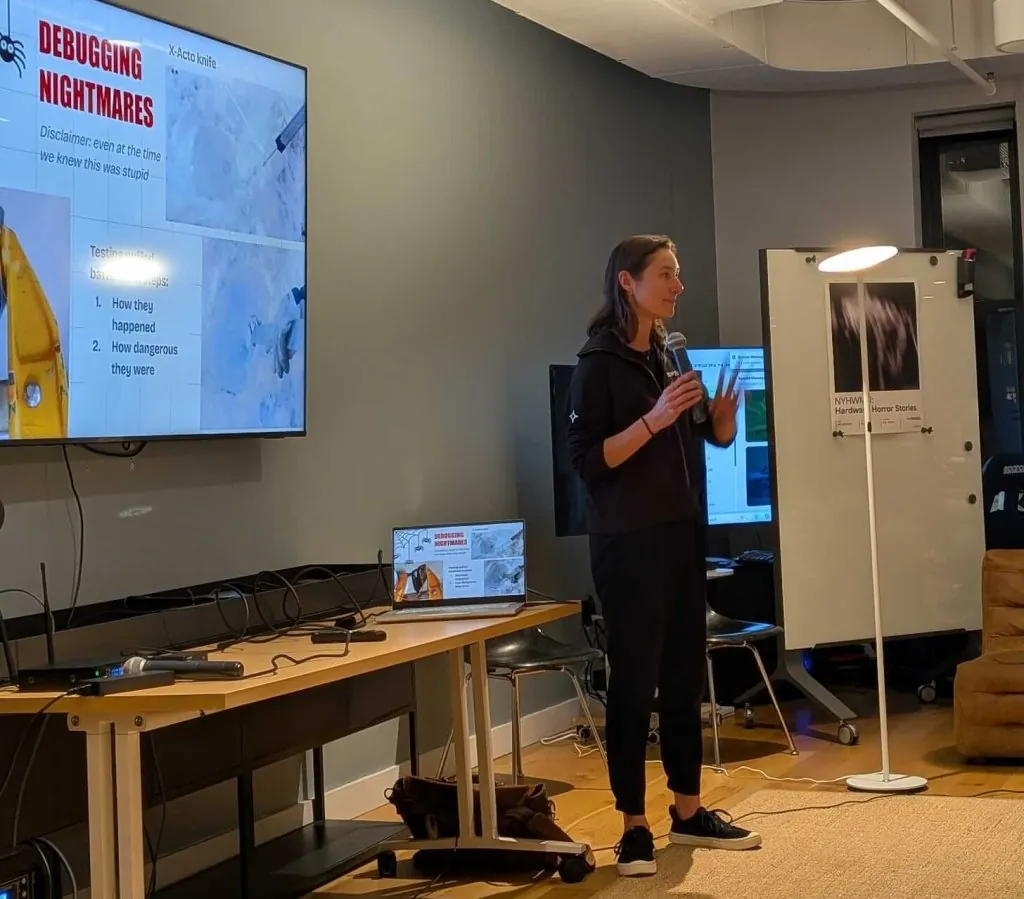
Nominal’s Mercer Borris shared stories from working on embedded systems, including wearables for industrial workers, swollen batteries, and intermittent failures involving expensive electronics.
Embedded development means troubleshooting across several layers at once. A symptom in the software can originate in the hardware, and the pressure to get something working can make a disciplined debugging process harder to maintain.
Mercer’s experiences brought the discussion back to testing methodology and the value of working across disciplines. Understanding how the electrical, mechanical, and firmware pieces interact is often what lets a team finally isolate the problem.
More time testing, less time writing drivers
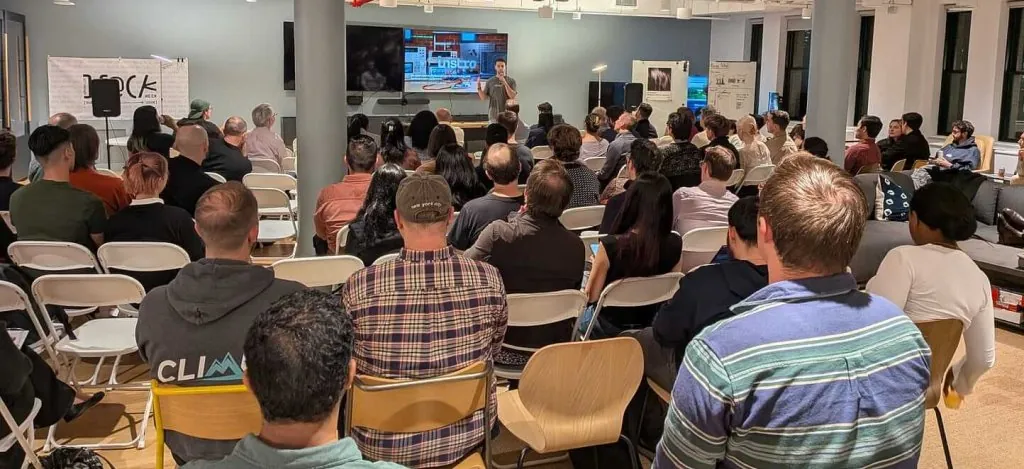
Nominal’s Max Leblang introduced instro, an open source Python library for interfacing with hardware test equipment.
Using a battery test stand as an example, Max walked through a familiar process: choose equipment, read datasheets, write control scripts, validate, and debug. Repeat for the power supply, electronic load, and data acquisition hardware.
Then try to build five more stands and discover that your chosen power supply has a 16-week lead time.
Swapping equipment can mean another round of driver development before testing resumes. Max demonstrated how instro provides a consistent interface across supported equipment, making those changes easier and freeing up engineering time for the tests themselves.
The time ABS broke me
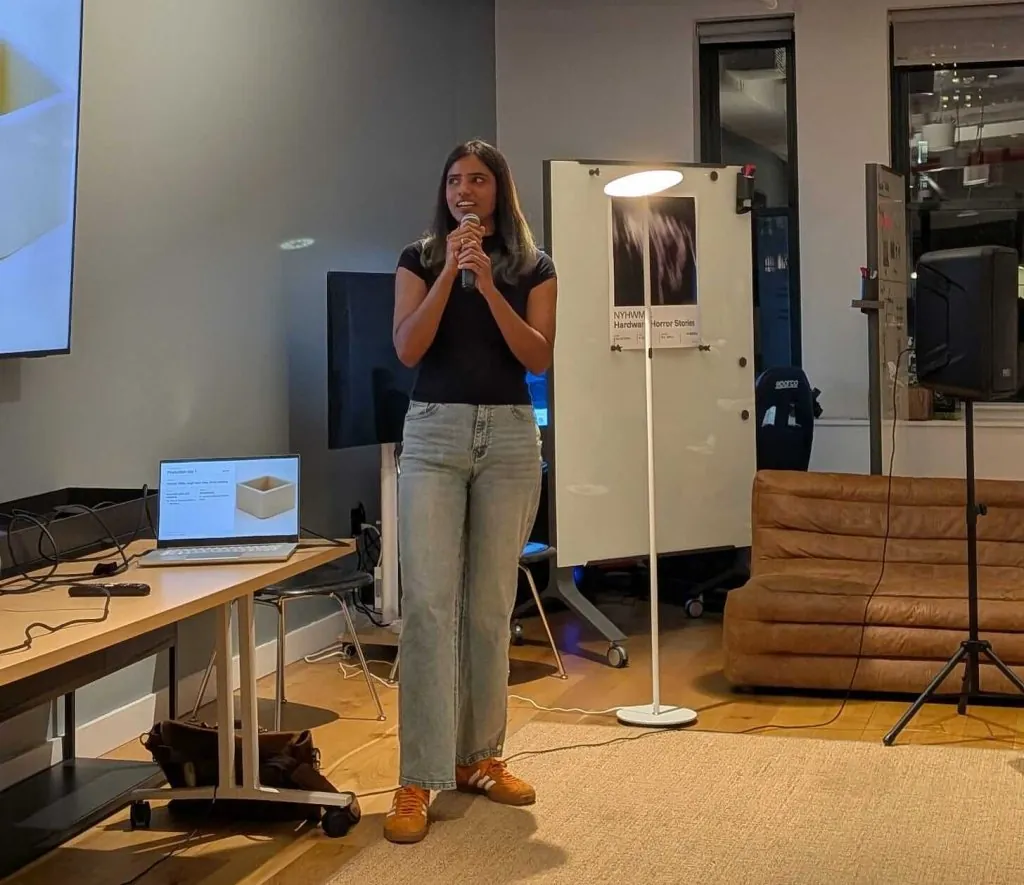
Cinerita Andrandes, head of manufacturing engineering at Makelab, shared a production challenge involving 800 parts, ABS, tight assembly fits, cosmetic requirements, and a fixed deadline.
Samples had been approved. But once production started, parts warped, lifted, and developed surface defects.The team worked through build plates, adhesives, temperatures, print settings, drying, and calibration. Five days disappeared, with 60% of test prints scrapped.
The overlooked variable was the room.
Drafts and high humidity were affecting the process. Sealing enclosure gaps and controlling moisture helped the team recover and deliver all 800 parts on deadline.
The lesson: The room is a process variable. A validated sample doesn’t mean every condition needed for repeatable production is under control.
A better product still needs a path to adoption
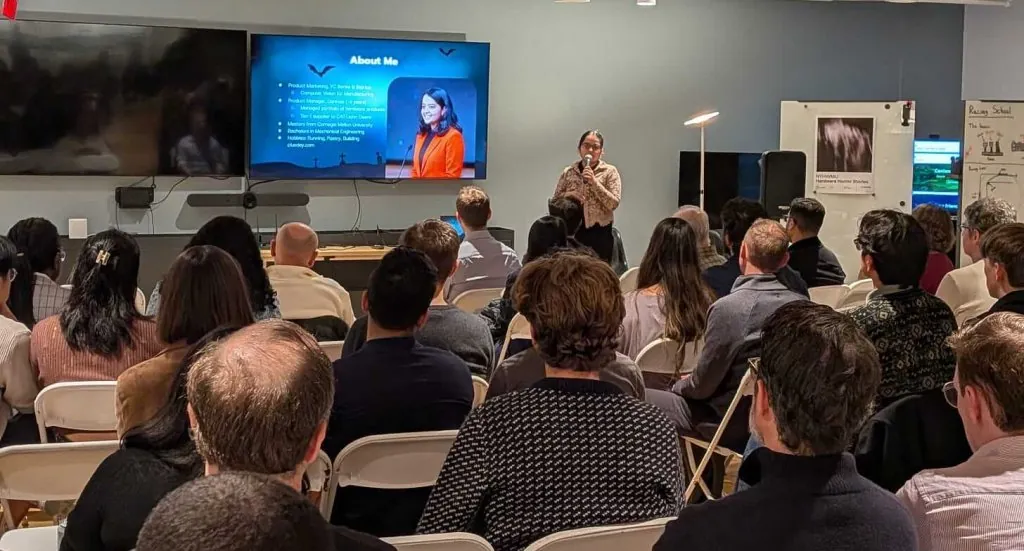
Tanya Gupta, who works in Product Marketing at Intenseye, shared a different kind of hardware horror story: a failed product launch.
Following an acquisition, a business had two competing product lines. The proposed solution was to combine the best of both into a new product. Customer research, concepts, manufacturing preparation, and launch planning were all part of the effort. Yet adoption still fell short.
Tanya outlined several reasons: sales teams had incentives to keep selling existing products, pricing affected the case for switching, and customers’ machine redesign cycles didn’t necessarily align with the launch.
Her takeaway was the importance of a migration strategy. Customers need a practical reason, and an opportunity, to move from the product they already trust to something new.
Why share the failures?
These stories came from one room in New York, but none of the problems are local. Production depends on the environment around the machine. Testing depends on the tools and equipment available. Adoption depends on customer timing and the people selling and supporting the product. Each story showed how much sits outside the immediate design problem, wherever you happen to be building.
Sharing those details gives other builders something they can use in their own work. That’s a big part of why communities like this one keep meeting.
About the NY Hardware Meetup
This recap was originally written and shared by the organizers of the NY Hardware Meetup: Mercer Borris, Lindsey Gideon, Anthony Dzaba, Paul Vizzio, and Nate Padgett. The meetup brings together a community of 10,000+ hardware professionals in New York, and it’s always looking for speakers, hosts, and sponsors with useful experiences to share. Thank you to the speakers and sponsors, and to Nominal for hosting.
If you’re in New York, check out the event calendar.
Informal is a freelance collective for the most talented independent professionals in hardware and hardtech. Whether you’re looking for a single contractor, a full-time employee, or an entire team of professionals to work on everything from product development to go-to-market, informal has the perfect collection of people for the job.