How the informal hardware collective stays connected IRL
Our cofounder Nate Pagett wrote a post last year answering the one question we get asked more than any other: What is a collective, anyway? His definition is simple. A collective is “a community of people who work together to achieve some outcome.” The part that sticks with me is what he said separates a collective from a talent marketplace: In a collective, members know each other as collaborators, not just participants. In a marketplace, nobody knows anybody.
For a lot of us, it started at a Hardware Meetup. I’m one of four co-organizers of the NY Hardware Meetup chapter, along with Mercer Borris, Anthony Dzaba, and Paul Vizzio, all of whom are also informal members. New York is just one of several cities where the meetup and the collective feed each other in this way. I recently compared our member lists with the meetup community lists in San Francisco, San Diego, San Jose, New York, Boston, and Seattle, and roughly a hundred informal members showed up on both. Seeing all those names in one place helped me put words to something I’d been noticing at our own events for a while.
Attending Hardware Meetups helps build rapport outside of project work. When two members land on the same project, the first week goes a lot smoother if they already know each other from a pitch night or a hardware happy hour. Sam has said that referrals are everything, and that they come from “our meetups, our studio spaces, past clients, partners, and our network of freelancers.” Referrals come from people who have seen your work and know how you think. A lot of those conversations happen at a meetup while nobody has a project on their mind yet.
It keeps our members close to the local companies doing interesting work. Founders show up to meetups for all kinds of reasons. Some are demoing a first prototype, some are pitching, some are hiring, and some are just hosting because they have the space. Members who are in those rooms regularly get to know those companies as they grow, usually well before informal ever gets a lead that one of them needs project help.
Here’s a look at our network region by region:
New York
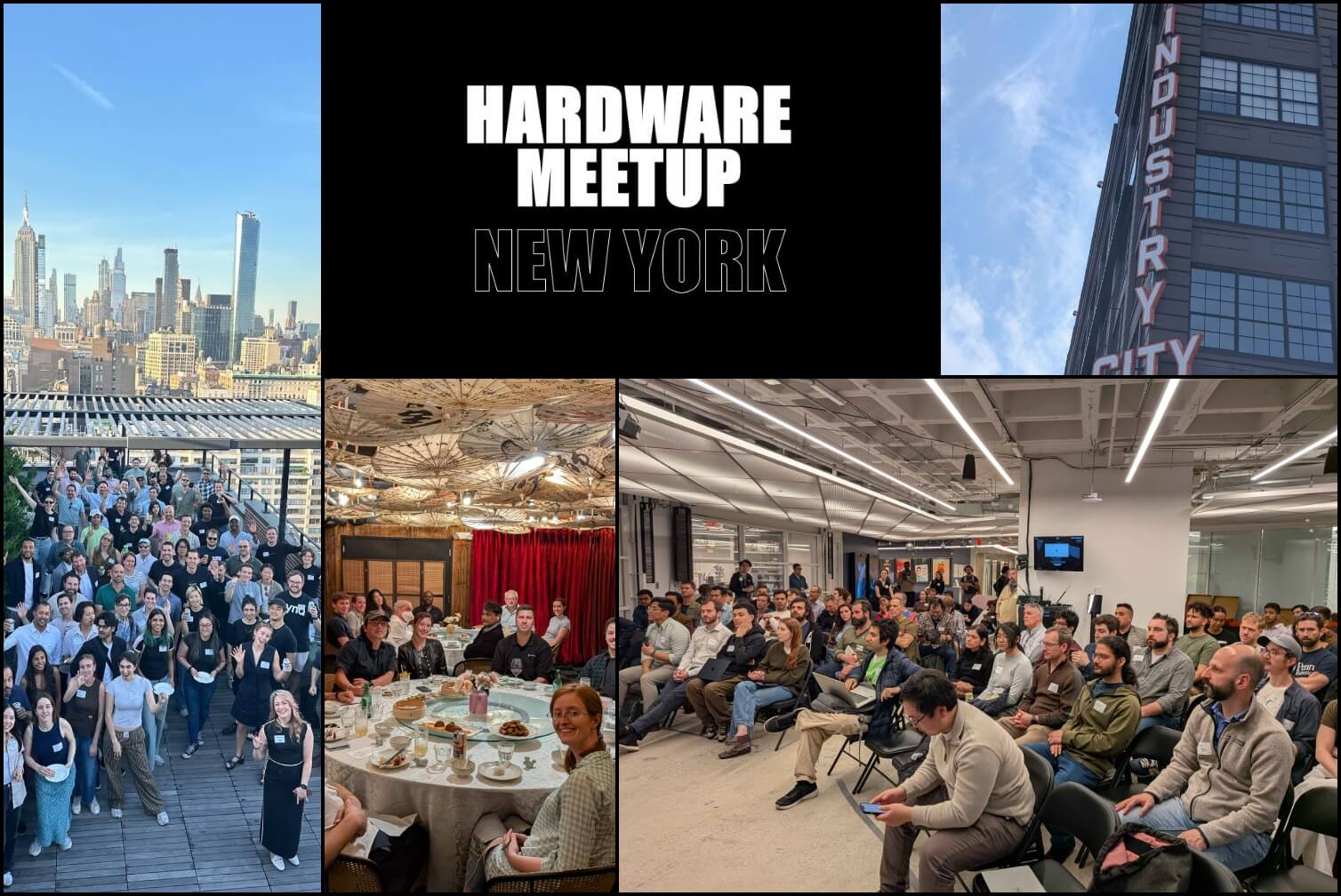
The 119th NY Hardware Meetup brought more than 175 people to Smart Design at the Brooklyn Navy Yard for a night on designing physical products for kids’ bodies and minds. Will Merrill of Smart Design, Greg Rousos of Sphero, and Deren Guler of Teknikio led the conversation, and Smart Design hosted and sponsored. New York had the biggest overlap in our cross-check, with about three dozen members in the community. Below is a snapshot of the community from past events.
California
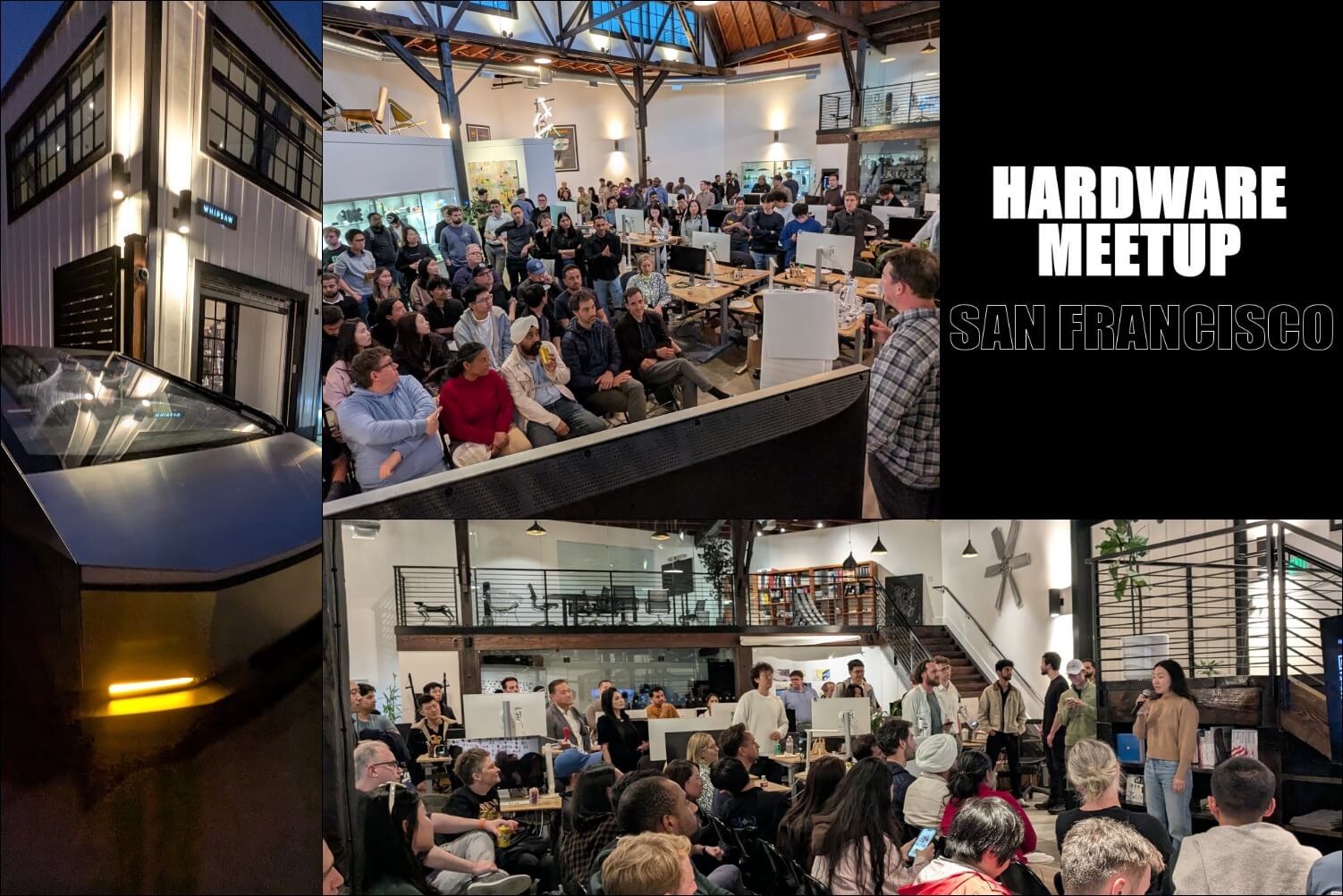
Studio 45 and informal spaces in San Francisco had a busy summer. The 136th SF Hardware Meetup was a demo night, happy hour style, with more than 400 people walking from table to table, sponsored by Soar. The SF Hardware Pitch Night packed in more than 275 people to watch six frontier hardware startups (Emoka, Lume Health, Sound Workshop, Sticker Camera, Aerial Avionics, and Nosh) pitch live to Ali Algain of Entrepreneurs First, Ryan Green of Antler, and Tess Robinson of FTB Capital Group, sponsored by RiseLink. And the Hardware Founder Dinner with Rho sold out with more than 25 founders, engineers, and investors discussing physical AI, robotics, and sensors over a three-course, family-style meal.
In California, our members are spread across the San Diego, San Francisco, San Jose, San Rafael, Oakland and LA meetups, and a few of them turn up on more than one list, which tells you how far people will drive for a good demo night. Mechanical engineering is the deepest bench, but the group also includes electrical and firmware engineers, industrial designers, and people on the operations, supply chain, marketing, and creative side. That’s close to a full product team in every corner of the state, and most of them already know each other by first name.
Massachusetts
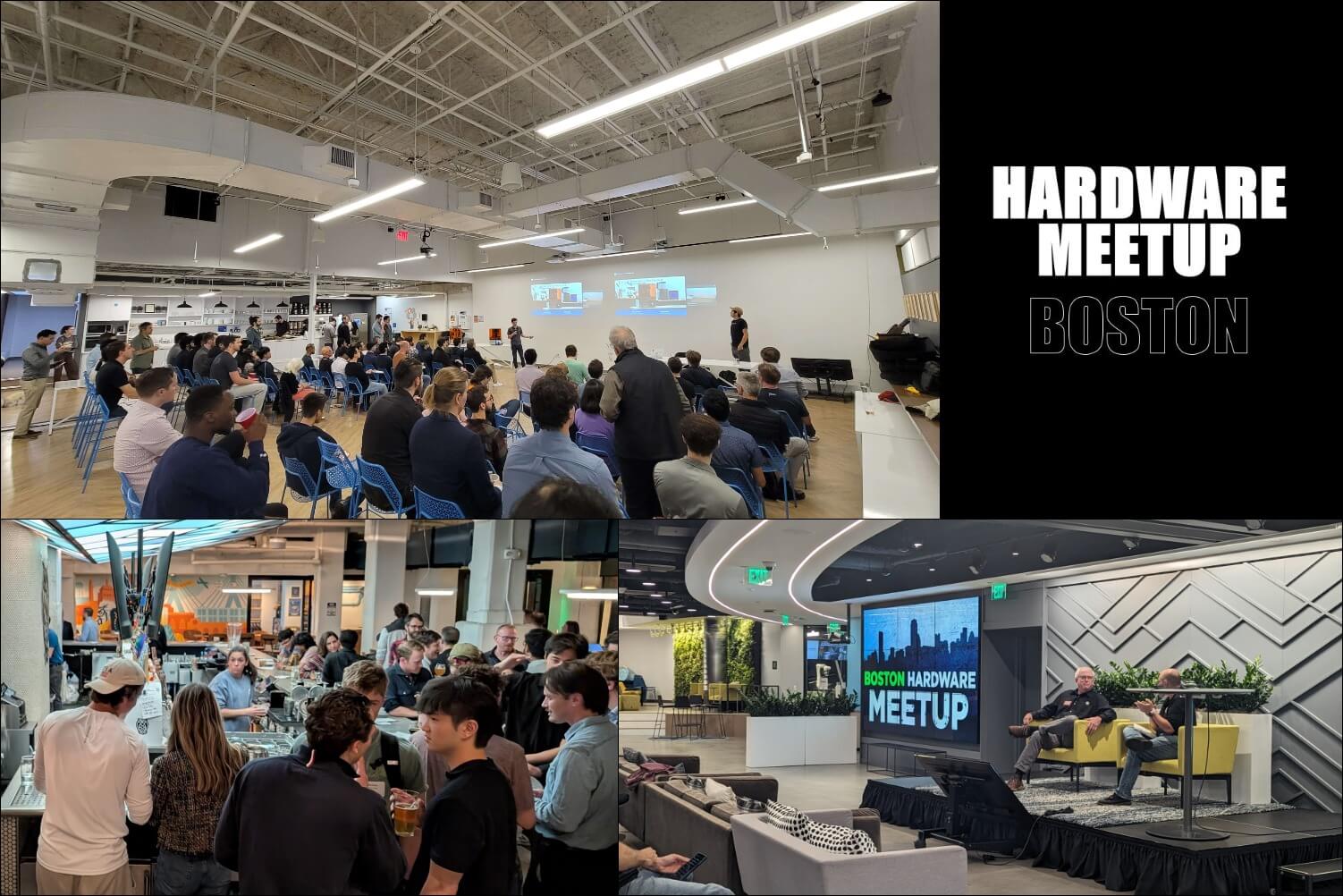
The Boston Hardware Happy Hour at Greentown Labs drew more than 500 climate and hardware builders to Greentown’s Somerville rooftop for a summer edition of their EnergyBar, co-hosted with the Boston Hardware Meetup and sponsored by CircuitHub.
Nearly half of our Massachusetts members are part of the Boston community, and it skews heavily toward mechanical engineering, with electrical engineers, industrial designers, and product and project managers rounding it out. A couple of them also show up on the Framingham list, so the habit clearly travels!
Beyond the big three
The pattern holds in smaller cities too. Seattle has a handful of members in the local meetup, covering mechanical and firmware engineering, supply chain, project management, and sales. Austin has a few. Sam is in Vermont, where the Burlington Hardware Meetup just held its tenth event. Wherever there’s a hardware meetup, there’s usually an informal member or two already in the room.
Why this matters to informal?
Overall, 79% of informal members live within 25 miles of a Hardware Meetup chapter and have attended at least one event. And 46 of the 53 Hardware Meetup chapters have at least one informal member nearby. The meetups are where you get to know people in the collective, build community, and meet local companies doing interesting work. That’s what a healthy collective looks like when it’s working.
If you’re a member and you’re not on your local Hardware Meetup list yet, go to your local chapter’s next event! If you’re building a hardware company and want to meet the people who can build the thing with you, come find us at the next one. And if you’re in New York, come say hi to me at our next event 🙂
informal is a freelance collective for the most talented independent professionals in hardware and hardtech. Whether you’re looking for a single contractor, a full-time employee, or an entire team of professionals to work on everything from product development to go-to-market, informal has the perfect collection of people for the job.